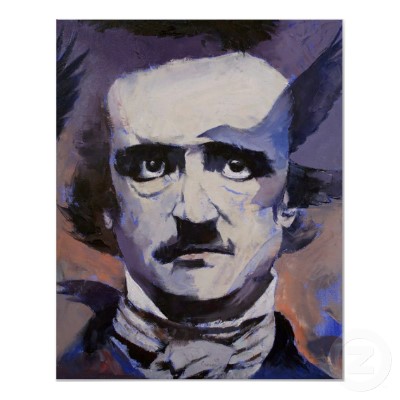
Showing posts with label Edgar Allan Poe. Show all posts

January 19, 2020

Our Past as a Dream: Edgar Allan Poe

“It is by no means an irrational fancy that, in a future existence, we shall look upon what we think our present existence, as a dream.” 

I cannot agree more with Poe’s statement here. Even within the stream of a single lifespan our distant past presents itself often as if it were a dream. One wonders: Is the life of the caterpillar a dream to the butterfly?

Let us entertain the thought that life persists after death (for myself, I believe it does). Just what will we remember of this existence? Will we remember the taste of the foods we enjoyed while we were here? Will we remember the cold sensation of winter breezes, the ancient auburn hue hovering over falling autumn leaves, the perfumed smell of loam-drenched trees after a summer thunderstorm, or the distant melodies of tiny birds greeting spring’s sunny advent?

One thing is certain, if life does persist after the death of our bodies, then Poe—at this very moment, wherever he is out there—knows the answer to our inquiry, and the truth of the above quote of his.

Edgar Allan Poe: January 19, 1809 — October 7, 1849 Happy 211th, dear poet

May 23, 2014

Edgar Allan Poe and Words


My daughter asked me what my favorite quote was and I told her I have too many to pick from. She told me to pick one and I did, then I asked her what hers was … without missing a beat she said: “Words have no power to impress the mind without the exquisite horror of their reality.” Wow! She told me these were the words of Edgar Allan Poe. Sweet! 


January 20, 2014

I had to post it ...


Poe's Annabel Lee


It takes a sort of disturbed, divine genius to concoct precious literary works that revolve around the theme of death, and of death’s potential, and of the suffering and the loss thereby, and to render that theme beautiful. Think about it … to draw beauty from the ultimate source of trepidation that, consciously or subconsciously, plagues the life of every living human being … to draw beauty from death? To achieve such a thing requires incredible wit, and audacity, and most certainly a creative mind unmoved by the prospect of risk.

Edgar Allan Poe is such a mind. He is said to have thought that the death of a beautiful woman is “the most poetical topic in the world.” As pathological as that statement may sound, I don’t believe that Poe was moved by some diabolical euphoria revolving around the death of beautiful women, or that some infernal strain of delight flowed through his blood by the thought of it. Poe’s poetical melancholy was derived from real tragic losses that he endured throughout his life, losses that involved women in his life for whom he cared deeply.

The most tragic of these losses was his wife Virginia, who died at the age of 24 after a long and painful battle with tuberculosis. Poe loved her dearly and with all his heart, and was steeped in a deep, desolate depression that could only be assuaged by the remote hope that his beloved might be reunited with him. It was from this tortuous mode of misery, coupled with the longing he had for his wife, that Poe’s final poem would emerge, Annabel Lee.

Annabel Lee is a poem Poe completed two years after Virginia’s death. He struggled desperately to make it as perfect as possible (it is said that there were roughly 11 known versions of it). The poem itself is about love, and about what happens with love when death intervenes.  

The narrator speaks of a love that he shared with a girl by the name of Annabel Lee. This love was so pure between the two, and so deep and innocent, that even the angels were jealous of it. One day “a wind blew out of a cloud, chilling” Annabel Lee, which is said to be the cause of her eventual death. The narrator goes on to say that it was the jealousy of these angels that produced this wind that killed his beloved. Notwithstanding, the narrator continues, the depth and purity of their love was such that it was immutable- nothing, not even death or angels or demons, could separate the two:

And neither the angels in Heaven above
Nor the demons down under the sea
Can ever dissever my soul from the soul
Of the beautiful Annabel Lee

The poem then takes a strange and almost repelling twist as it comes to a close. We are told that despite their immutable love, and the beautiful imagery describing Annabel’s presence with him, every evening, during the night-tide, the speaker goes into the tomb of his wife and lies there lovingly by her side.

It’s a fascinating poem that consists of six stanzas with equally fascinating imagery. The tempo of it, most especially when read aloud, flows so incredibly well. Poe uses repetition, alliteration, and polysyndeton with great literary effectiveness. It is a poem that every poet, and every romantic minded person, must of necessity know.
  

Annabel Lee

It was many and many a year ago,
In a kingdom by the sea,
That a maiden there lived whom you may know
By the name of Annabel Lee;
And this maiden she lived with no other thought
Than to love and be loved by me.

I was a child and she was a child,
In this kingdom by the sea;
But we loved with a love that was more than love-
I and my Annabel Lee;
With a love that the winged seraphs of heaven
Coveted her and me.

And this was the reason that, long ago,
In this kingdom by the sea,
A wind blew out of a cloud, chilling
My beautiful Annabel Lee;
So that her highborn kinsman came
And bore her away from me,
To shut her up in a sepulchre
In this kingdom by the sea.

The angels, not half so happy in heaven,
Went envying her and me-
Yes!- that was the reason (as all men know,
In this kingdom by the sea)
That the wind came out of the cloud by night,
Chilling and killing my Annabel Lee.

But our love it was stronger by far than the love
Of those who were older than we-
Of many far wiser than we-
And neither the angels in heaven above,
Nor the demons down under the sea,
Can ever dissever my soul from the soul
Of the beautiful Annabel Lee.

For the moon never beams without bringing me dreams
Of the beautiful Annabel Lee;
And the stars never rise but I feel the bright eyes
Of the beautiful Annabel Lee;
And so, all the night-tide, I lie down by the side
Of my darling- my darling- my life and my bride,
In the sepulchre there by the sea,
In her tomb by the sounding sea.

January 19, 2012

Poe(t)

Seriously though, how coincidental and funny is it that, if you simply add a T to Poe's name, you have the word Poet? Weird …

Poe's Hymn

It is said that Poe was drawn to the inside of a Jesuit church by the pristine ringing of a bell. Inquiring into the significance of it, he was told by them that it was in commemoration of the annunciation by Gabriel to Mary of her son to be, and of her willingness and obedience to it (i.e. her ‘be it unto me as you say’ statement). The poem below, I am told, was inspired by this experience.

Hymn

At morn- at noon- at twilight dim-
Maria! thou hast heard my hymn!
In joy and woe- in good and ill-
Mother of God, be with me still!
When the hours flew brightly by,
And not a cloud obscured the sky,
My soul, lest it should truant be,
Thy grace did guide to thine and thee;
Now, when storms of Fate o'ercast
Darkly my Present and my Past,
Let my Future radiant shine
With sweet hopes of thee and thine!

March 10, 2011

Hanks, Poe and Helen


I love how poetry weaves herself into my life without my having to do anything, as if she seeks me.

I was visiting my neighbor’s one day and, because they’re both avid readers, there were books strewn everywhere throughout their house. While I was sitting in their dining area I happen to look down and this little grey book caught my attention- it was the collected works of Edgar Allan Poe (and it was gorgeous looking- tiny and fragile and old, almost like brittle papyrus found tucked away in some forgotten cave).

I picked it up and read the first few lines of the very first poem and I immediately knew I had heard these lines before- but where? Ah ha! It was the poem that Tom Hanks' character recited throughout the movie Ladykillers- the poem is called, To Helen.

To Helen

Helen, thy beauty is to me
Like those Nicean barks of yore
That gently, o'er a perfumed sea,
The weary, way-worn wanderer bore
To his own native shore.

On desperate seas long wont to roam,
Thy hyacinth hair, thy classic face,
Thy Naiad airs have brought me home
To the glory that was Greece,
And the grandeur that was Rome.

Lo, in yon brilliant window-niche
How statue-like I see thee stand,
The agate lamp within thy hand,
Ah! Psyche, from the regions which
Are Holy Land!

The poem is an anomaly. It’s a gorgeous read and it flows perfectly- this despite the fact that its parameters seem jumbled. Just look at the way the rhyme scheme is laid out:

ababb ababa abbab (thoroughly inconsistent)

Then there’s the anomaly of the poem’s meter: 88886 (syllables) for the first stanza, 89877 for the second, and 88884 for the final stanza. Huh? And yet, again, it contributes directly to the beauty and rhythm of the work itself.

What’s awesome is that this poem was composed while Poe was roughly 14 years old (it was dedicated to the mother of Poe’s best friend, Jane Stith Stanard, his “first real love”).*

The original composition (published in 1831) is slightly different from the revised 1845 version most of us are familiar with. Here’s the original composition (the areas highlighted are where Poe made revisions):

To Helen

Helen, thy beauty is to me
Like those Nicean barks of yore,
That gently, o'er a perfum'd sea,
The weary way-worn wanderer bore
To his own native shore.

On desperate seas long wont to roam,
Thy hyacinth hair, thy classic face,
Thy Naiad airs have brought me home
To the beauty of fair Greece,
And the grandeur of old Rome.

Lo ! in that little window-niche
How statue-like I see thee stand
!
The folded scroll within thy hand —
A Psyche from the regions which
Are Holy land !

It’s strange to say this, I know, but I gives me comfort to know that even a great poet like Poe will go back- years later- and feel the impulse to edit his own works (this occurs with me often).

I suppose the reason for this post- aside from Poe’s lovely poem- is that it seems that no matter where I’m at or what I’m doing, there’s always something referring me to poetry. I thank God for that.

Although Ladykillers is a dark comedy, and although Tom Hanks’ character is a goofy, scholarly type, I thought that the delivery of Poe’s poem was beautifully done. Here’s the poem as it was recited throughout the movie (forgive me for the subtitles) …


*It is said- and it makes sense- that the catalysis for Poe’s revised version was a new love, Sarah Helen Whitman. Some think the original poem was actually dedicated to her, and not Jane Stith Stanard (I’m sure this has to do with the curious coincidence of her middle name and the poem’s title), but that doesn’t add up at all. The first time Whitman and Poe met was in 1842 (long after the poem’s original scripting). What happened- and this is purely my take on it … what happened is that Poe met this lovely lady in 1842, became infatuated with her, and three years later re-edited and re-dedicated the poem to her. Seems like simple psychology to me. Still, the plain truth is Stanard was the inspiration of the poem, not Whitman.

January 19, 2011

Sarah Helen Whitman


Sarah Helen Whitman was a romantic interest of Poe's. Coincidentally, not only is she a poet, she also shares Poe’s date of birth (January 19th, 1803).

They both met later in life when they were both widowed- he was 39, she was 45. Poe desperately wanted to marry her, and even though he had at one point convinced her to do so, she had the engagement broken off.

It is said by some that Poe’s Poem, To Helen*, was inspired by the infatuation he had for her. I personally don’t believe this to be the case, and I’ll explain my position perhaps tomorrow or the next day in a post.

Now whether Whitman inspired Poe’s Helen or not, what cannot be denied is this- that Poe inspired Whitman to compose a poem that she would openly dedicate to him. Here’s that poem below:


To Edgar Allan Poe

IF thy sad heart, pining for human love,
In its earth solitude grew dark with fear,
Lest the high Sun of Heaven itself should prove
Powerless to save from that phantasmal sphere
Wherein thy spirit wandered, -- if the flowers
That pressed around thy feet, seemed but to bloom
In lone Gethsemanes, through starless hours,
When all who loved had left thee to thy doom,--
Oh, yet believe that in that hollow vale
Where thy soul lingers, waiting to attain
So much of Heaven's sweet grace as shall avail
To lift its burden of remorseful pain,
My soul shall meet thee, and its Heaven forego
Till God's great love, on both, one hope, one Heaven bestow.


*You’ll notice if you click the link to this poem a picture of Whitman pops up with the poem beneath it- indicating that the poem was composed for her … again, I doubt this assertion (I’ll explain myself soon).

Edgar Allan Poe*


Edgar Allan Poe (1809 – 1849)

Edgar Allan Poe was born in Boston, Massachusetts, on January 19, 1809. Poe's father and mother, both professional actors, died before the poet was three and John and Frances Allan raised him as a foster child in Richmond, Virginia. John Allan, a prosperous tobacco exporter, sent Poe to the best boarding schools and later to the University of Virginia, where Poe excelled academically. After less than one year of school, however, he was forced to leave the University when Allan refused to pay his gambling debts.

Poe returned briefly to Richmond, but his relationship with Allan deteriorated. In 1827, he moved to Boston and enlisted in the United States Army. His first collection of poems, Tamerlane, and Other Poems, was published that year. In 1829, he published a second collection entitled Al Aaraaf, Tamerlane, and Minor Poems. Neither volume received significant critical or public attention. Following his Army service, Poe was admitted to the United States Military Academy, but he was again forced to leave for lack of financial support. He then moved into the home of his aunt, Mrs. Maria Clemm and her daughter Virginia, in Baltimore, Maryland.

Poe began to sell short stories to magazines at around this time, and, in 1835, he became the editor of the Southern Literary Messenger in Richmond. He brought his aunt and twelve-year-old cousin, Virginia Clemm, with him to Richmond. He married Virginia in 1836. Over the next ten years, Poe would edit a number of literary journals including the Burton's Gentleman's Magazine and Graham's Magazine in Philadelphia and the Broadway Journal in New York City. It was during these years that he established himself as a poet, a short-story writer, and an editor. He published some of his best-known stories and poems including "The Fall of the House of Usher," "The Tell-Tale Heart," "The Murders in the Rue Morgue," and "The Raven." After Virginia's death from tuberculosis in 1847, Poe's life-long struggle with depression and alcoholism worsened. He returned briefly to Richmond in 1849 and then set out for an editing job in Philadelphia. For unknown reasons, he stopped in Baltimore. On October 3, 1849, he was found in a state of semi-consciousness. Poe died four days later of "acute congestion of the brain."

Poe's work as an editor, a poet, and a critic had a profound impact on American and international literature. His stories mark him as one of the originators of both horror and detective fiction. Many anthologies credit him as the "architect" of the modern short story. He was also one of the first critics to focus primarily on the effect of the style and of the structure in a literary work; as such, he has been seen as a forerunner to the "art for art's sake" movement. French Symbolists such as Mallarme and Rimbaud claimed him as a literary precursor. Baudelaire spent nearly fourteen years translating Poe into French. Today, Poe is remembered as one of the first American writers to become a major figure in world literature.

*Biography from Poets.org

The Poets

As of April 9th, 2010